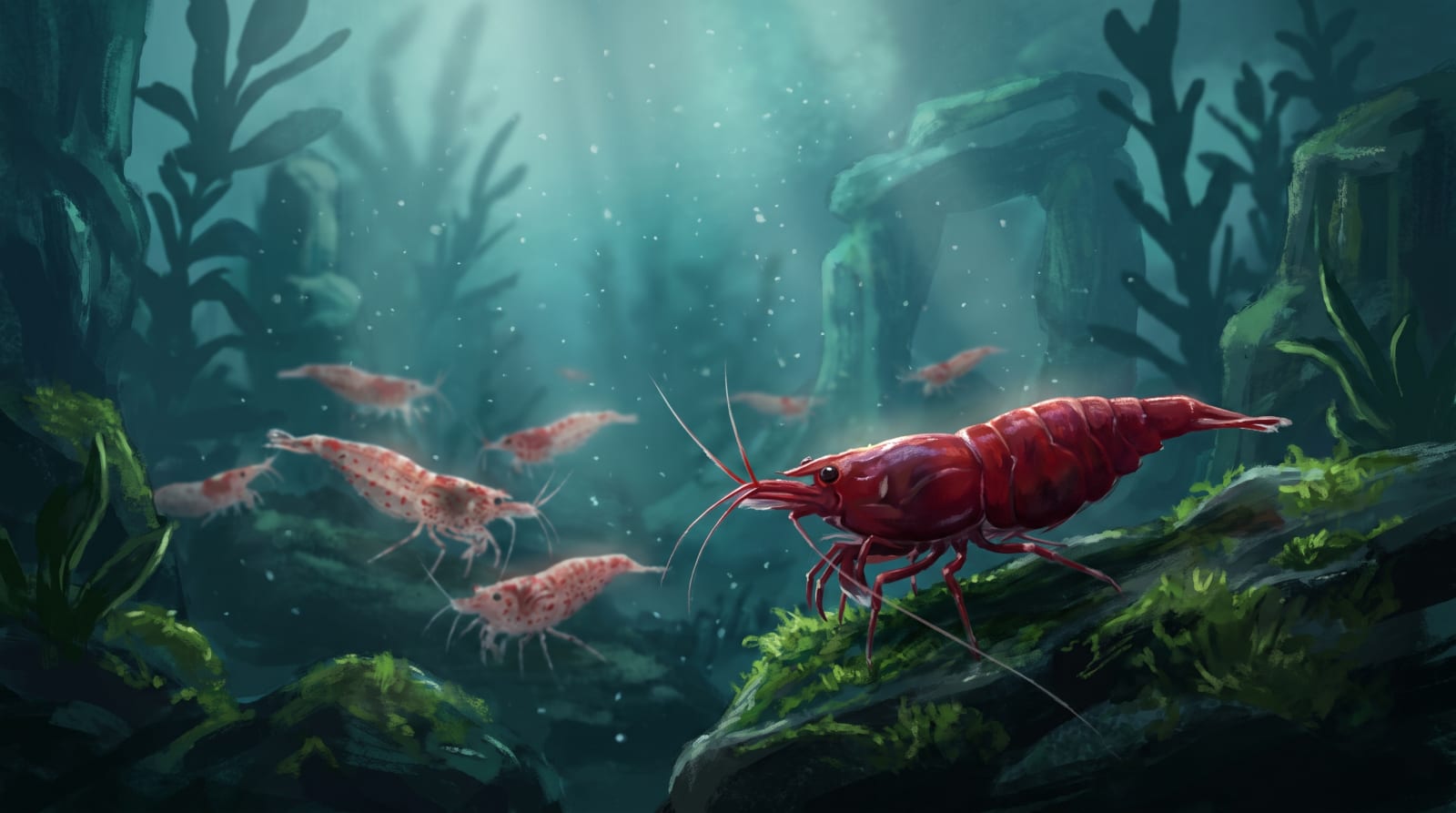
Every deep, even, opaque cherry shrimp you've ever admired is the result of selective breeding — somebody, over many generations, kept the best-coloured shrimp and moved the rest on. It isn't clever science and it doesn't need special equipment. It needs a good starting group, one tank kept as a single line, and the patience to repeat a simple loop brood after brood. This guide covers how we run a colour project in our breeding room, and how you can start one on a shelf at home.
What selective breeding actually is
Selective breeding means deciding which shrimp get to be parents. Left alone, a colony breeds at random and drifts towards its own average, so a group of mixed-grade reds stays a group of mixed-grade reds indefinitely. Step in and breed only from your deepest, most even shrimp, and each generation's average creeps upward towards them. That's the whole mechanism: you are the thing that stops the colony sliding back to the middle.
Line-breeding is the version that fixes a colour. You take a single line — one colour, one tank, closed to outside stock — and select within it generation after generation until the trait breeds reliably true. Because Neocaridina reach breeding age at three to five months and a female broods roughly every five to six weeks, generations stack quickly, and a shrimp breeding project that would take years in larger animals moves in months here.
The reason it works at all is genetic. Colour in these shrimp is a heritable trait sitting on a wild-type background, and selection concentrates the versions you want while thinning the ones you don't. We've mapped where each colour comes from in our guide to Neocaridina colour genetics; for a project you only need the practical upshot, which is that better parents make better babies, reliably, if you keep the line clean.
Start with the best stock you can
The single biggest decision you'll make is the group you buy, because your starting stock sets the ceiling. You cannot select a trait that isn't in the tank — feed and lighting reveal colour, but they never add genes the parents don't carry. Ten washed-out standard shrimp will give you washed-out babies however well you keep them.
So buy for the project, not the price. A group of genuine high-grade stock, of one line, from a breeder who culls hard is the fast start; that's a lot of what you're paying for when high grade runs £30–50 per 10 rather than the £2–4 of standard shrimp. If the budget won't stretch, the slower route is real too: start with standard stock and simply select harder for longer. It works, it just costs you generations. Whichever you choose, buy at least 10–15 so the line has genetic breadth to grow from, and try to see a group photo rather than one show female fronting the listing.
The core loop: select, separate, repeat
Once the colony is breeding, the project is one loop run on repeat. It's boring in the best way — the boredom is what produces the shrimp.
- Grow a brood out. Let a generation reach three to five months, when colour has settled and sex is obvious. Juvenile colour is a poor guide; wait until it's mature before you judge.
- Pick your best 10–20%. Go through the grown-out group and choose only the deepest, most even, most fully covered shrimp — and include both sexes, because the males carry colour genes just as the females do even though they're smaller and paler. These are your next breeders.
- Separate the rest. Move everything you didn't pick out of the breeding tank so it can't pass its genes on. Removing a shrimp from the line isn't killing it — what culling actually means is separating and rehoming, and those lower grades make perfectly good display or community animals.
- Breed the selected group on. Your chosen 10–20% become the parents of the next generation, in their own clean tank, and the loop starts again.
Repeat that for a few generations and the maths does the work. Each round, the average shifts towards the top of the previous round, because you keep amputating the bottom of the range and breeding only from the top. Selecting both parents matters here — pick only pretty females and breed them to whatever males turn up and you're doing half a project.
What "best" actually looks like
To select well you need to see grade the way a grader does, and it comes down to three things you can read through the glass. Coverage is how much of the shrimp carries colour rather than clear or translucent shell. Depth is how saturated and opaque that colour is. And the extremities — legs, rostrum and tail fan — colour up last, so a shrimp carrying pigment right down its legs is further along than one with clear legs. Leg colour is often the tell that separates your keepers from your culls.
We keep a "selection jar" habit at grading time: net the candidates into a white cup of tank water and look at them against the pale background in daylight. Faults that hide against dark substrate — a translucent patch, a thin saddle of colour, a washed underside — jump straight out. The full ladder from cull to the top grades, and the same read for the blue, yellow, green and dark lines, is laid out in our guide to Neocaridina grades.
Select for the same target every generation. Chasing "deeper red" one round and "more coverage" the next pulls the line in two directions and fixes neither. Decide what the top of your line looks like — a solid Painted-grade red cherry, say — and hold everyone to it.
One line, one tank
None of this survives contact with a second colour in the tank. Neocaridina are all one species and interbreed freely, so a stray blue in your red project doesn't add a splash of variety — it injects genes that pull the whole line back towards wild-type brown within a couple of generations. A colour project is a closed line by definition, and mixing Neocaridina colours explains exactly how fast the muddying happens.
In practice that means one line per tank, no exceptions, and real care when you add stock. New shrimp from another source, even the "same" colour, can carry hidden variation that undoes your selection, so quarantine and eyeball them before they go anywhere near the project. The discipline is the point: a breeder who guards the line is the reason high grade holds its grade.
Don't breed yourself into a corner
Here's the honest tension in any line-breeding project. Selecting hard from a small group narrows the gene pool, and a pool narrowed too far can start to show it — smaller broods, weaker vigour, the occasional run of poor moults. Some keepers breed tight lines for years and never see a problem; others hit a wall and have to freshen the blood. We've never treated it as a crisis, but we plan around it.
The safe practice is to keep your selected group as large as the target allows — your best 15–20%, not your best two shrimp — so you're concentrating colour without collapsing diversity. If a line does lose steam, the fix is an outcross: bring in unrelated stock of the same colour line, breed it in, then resume selecting. You take a grade step backwards for a generation to go forwards after. Keeping a second, separately sourced tank of the same line running is cheap insurance against ever needing to start over.
How long a project takes
Fast, by animal-breeding standards, but not overnight. Reckon on three to five months per generation to grow a brood to judgeable maturity, and a meaningful lift in a line over three or four generations — so somewhere around a year to eighteen months to take a middling group to visibly better, tighter colour. Each generation also grows your numbers, since a healthy colony roughly doubles every two to three months, so by the time you're selecting hard you'll have plenty to choose from; the colony growth maths shows how the numbers pile up.
The first generation feels like nothing is happening, because it isn't yet — you're just growing your starters and their first babies. The change shows from the second selection on, when you're breeding chosen-from-chosen. That's the point most projects either click or get abandoned, and the ones that click are simply the ones that kept running the loop. For the whole breeding process underneath a colour project, from a female's first saddle to a self-sustaining colony, see our cornerstone guide on how to breed cherry shrimp.
FAQ
How do you selectively breed cherry shrimp for colour?
Keep one colour line in its own tank, grow each brood to three to five months so colour and sex are clear, then breed only from the best 10–20% — the deepest, most even, most fully covered shrimp, both sexes. Move the rest out so they can't pass their genes on, and repeat every generation. Over a few rounds the line's average colour climbs towards your top shrimp.
How long does it take to improve cherry shrimp colour?
Reckon on a year to eighteen months for a visible lift. Each generation takes three to five months to reach judgeable maturity, and you need three or four rounds of selection before the improvement is obvious. The first generation shows little; the change appears from the second selection on, once you're breeding your chosen shrimp from an already-chosen group.
Do you have to cull shrimp to improve their colour?
You have to stop your weaker shrimp breeding, but that doesn't mean killing them. Culling in this hobby means separating the lower grades out of the breeding tank and rehoming them — as display shrimp, community stock, or gifts to other keepers. They live and breed perfectly well; they just do it somewhere other than your project. Without that step, the colony drifts back to its average.
Will cherry shrimp colour improve on its own?
No. Left to breed at random, a colony trends towards its own average and stays there, so mixed-grade stock stays mixed-grade. Colour only improves when you intervene and breed selectively from the best each generation. Good food, dark substrate and stable water help existing colour show its best, but they can't add colour the parents don't genetically carry.
How many shrimp do you need to start a breeding project?
Start with at least 10–15 of a single line, ideally high grade from a breeder who culls hard, so the line has both quality and enough genetic breadth to grow from. Fewer than ten and you risk narrowing the gene pool too quickly; a larger, well-chosen group lets you select hard for colour without breeding the vigour out of the line.