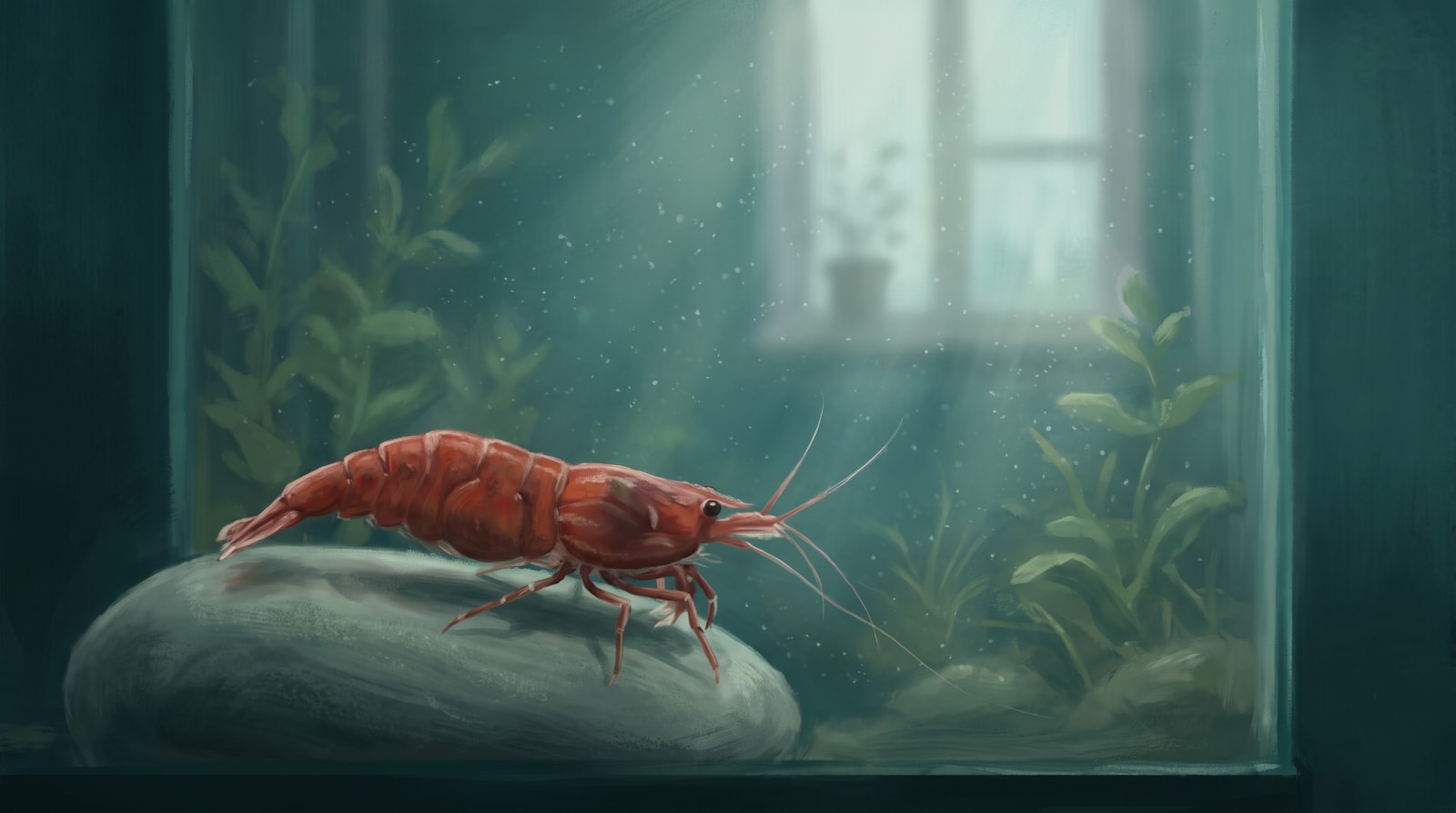
Most people who ask us whether cherry shrimp are easy to keep are really asking two things at once: can I keep them alive, and will I actually enjoy it? The honest answer to the first is yes — they're the most forgiving invertebrate in the hobby, and in most of the UK they live in nothing more exotic than dechlorinated tap water. The second depends on what you want from an animal, and that's where the honest truths come in. This guide lays out the real cost, the real effort, and the downsides we'd want a friend to hear before they buy.
The honest case for cherry shrimp
We keep coming back to Neocaridina after years of breeding them, so it's only fair to start with what's genuinely good.
They're cheap to try. A starting group of ten standard shrimp is a £20–40 outlay, and the tank around them doesn't have to cost much either — our £60 budget build runs a real colony on supermarket-shelf money.
They're low-effort once settled. A mature tank asks for about fifteen minutes a week: a small water change, a wipe of the glass, a feed check. No walking, no daily anything, no fuss when you're away for a weekend.
They breed for free. There's no larval stage to nurse — a berried female releases fully formed miniatures that graze from day one, so a healthy tank quietly restocks itself. Watching a group of ten become a proper colony over one summer is most of the appeal.
And they earn their keep, grazing algae and biofilm off every surface all day. A busy colony is genuinely absorbing to watch, more so than most people expect from "a tank of shrimp". If you want the full method behind all of that, our cherry shrimp care guide is the complete version. This page is about whether you should.
What cherry shrimp actually cost
There are two numbers worth separating: setup and livestock.
Setup is a one-off. You can spend a fortune on a designer nano tank, but you don't need to — a cycled 19-litre tank with a sponge filter, a bag of inert substrate, a dechlorinator and a few plants is the whole list. Done sensibly it lands around £60, and our budget build breaks that down item by item.
Livestock is where grades bite. Standard-grade cherries run £2–4 per shrimp in the UK, so a starting colony of ten is £20–40. Step up the red grading ladder — Sakura, Fire Red, Painted Fire Red — and the price climbs, with high-grade groups usually sold at £30–50 per 10. You're paying for generations of careful selection there, not a different animal.
Running costs are the pleasant surprise. Cherries eat mostly biofilm, so a tub of quality shrimp food lasts months. Most UK homes never need a heater. There's no CO2 to buy for a low-tech tank. The electricity is a small air pump and maybe a light on a timer. After setup, keeping shrimp is one of the cheapest hobbies going.
We're not selling shrimp ourselves right now — join the waitlist if you'd like an email should that change. Whoever you buy from, pick a keeper who can tell you the exact water their shrimp were raised in.
How much work is a shrimp tank, really?
Two honest phases: the wait, then the routine.
The wait is up front and non-negotiable. A new tank has to cycle — grow the bacteria that turn ammonia into far less harmful nitrate — before a single shrimp goes in, and that takes four to six weeks or more. Skipping it is behind most of the week-one deaths we hear about. If you want livestock in the tank this weekend, cherry shrimp are the wrong pet; if you can wait a month, they're one of the easiest. Our guide to cycling a shrimp tank walks the whole thing through.
The routine, once you're stocked, is genuinely light. We spend about fifteen minutes a week per colony: a 10–20% water change with dechlorinated, temperature-matched water, a wipe of the front glass, a quick TDS check, and thirty seconds of watching to be sure everyone's grazing. Feeding is two or three times a week, not daily — an established tank feeds the shrimp most of the time on its own.
The real skill isn't labour, it's restraint. The two things that kill cherry shrimp for beginners are overfeeding and chasing "perfect" water with additives, and both are habits you stop rather than start. If you're the sort who likes to tinker daily, a shrimp tank will test your self-control more than a needy pet ever would.
The honest downsides
Now the part the care articles tend to gloss over.
They don't live long. Cherry shrimp live 1–2 years, and no amount of good husbandry changes that much — it's simply the species. In a breeding colony the generations overlap so completely that the tank never feels like it's ending, but if you bond with individuals, an animal you'll know for eighteen months is a different proposition to a fish that lasts a decade. Our lifespan and growth-stages guide is honest about the timeline.
Colonies crash. Not often, and rarely without a cause, but it happens — a rough water change, a summer heatwave, an unnoticed ammonia spike, a contaminated plant, and a thriving colony can drop hard inside a week. Most crashes trace back to a swing or a toxin rather than plain bad luck, which is exactly why our diagnostic checklist exists. Anyone who promises you shrimp never die is selling something.
You can't freely medicate the tank. This is the big one for anyone picturing shrimp in a mixed community aquarium. Copper — the active ingredient in a huge slice of fish medications — is lethal to invertebrates. If your community fish come down with something that needs a copper treatment, you can't dose it with shrimp in the tank; you have to move the fish out first. In a display aquarium that's a real constraint, and it catches people out. Our shrimp-safe medications guide spells out what you can and can't use.
They're not interactive. Cherry shrimp won't learn you, greet you, or rush the glass at feeding time. They're an aquascape you watch and a colony you tend, not a pet that engages back. Plenty of people — us included — find a busy shrimp tank endlessly watchable, but if you want a pet with personality, set that expectation now.
Soft-water regions have homework. If you're in a soft-water part of the UK — much of Scotland, Wales, Cornwall or the North West — your tap water doesn't carry enough mineral for reliable moulting, so you'll need to remineralise. It isn't hard, but it's an extra step that hard-water keepers around London simply skip.
Who cherry shrimp suit — and who should think twice
Cherry shrimp are a near-perfect fit if you want a low-cost, low-effort, self-sustaining piece of living aquascape; if you find small things endlessly watchable; if you're patient enough to cycle a tank properly; and if you can keep your hands out of it once it's running.
Think twice if you want an interactive pet, if you need livestock in the tank next weekend, or if your heart's set on a mixed community you'll want to medicate freely. None of those rule shrimp out, but they're all worth knowing before the £20–40 leaves your pocket rather than after.
For most people asking whether cherry shrimp are easy to keep, the answer stays a confident yes. Just go in with the whole picture.
FAQ
Are cherry shrimp easy to keep?
Yes — they're the most forgiving dwarf shrimp in the hobby and one of the easier aquarium animals full stop. The two things that catch beginners out are stocking an uncycled tank and unstable water. Cycle the tank properly, keep parameters steady, and dechlorinate every water change, and cherries largely look after themselves. The hard part is patience up front, not effort later on.
How much does it cost to keep cherry shrimp in the UK?
Budget around £60 for a sensible tank setup as a one-off, then £2–4 per standard-grade shrimp — so £20–40 for a starting group of ten. High grades cost more, at £30–50 per 10. Running costs are low: a tub of food lasts months, most homes skip a heater, and there's no CO2 to buy for a low-tech tank.
Are cherry shrimp good pets?
For the right person, absolutely — they're cheap, fascinating and self-sustaining. But they're a watch-and-tend pet, not an interactive one: they won't recognise you or come to be fed, and they live only 1–2 years. If you want a colony to observe and a bit of living aquascape to look after, they're superb. If you want an animal with personality, look elsewhere.
How much work is a shrimp tank?
About fifteen minutes a week once it's established — a small water change, a glass wipe, a TDS check and a feed every two or three days. The catch is the four-to-six-week cycle before you add any shrimp at all. After that, the main skill is restraint: overfeeding and over-tinkering cause far more deaths than the odd missed chore.
Can you keep cherry shrimp with fish?
You can, with two honest caveats. Anything with a mouth big enough will eat shrimplets, so a mixed tank rarely grows into a colony. And you can't freely medicate a tank with shrimp in it, because copper-based fish treatments kill invertebrates. For a thriving colony we keep cherries species-only; for a display, accept it's fish-first with a few surviving adults.