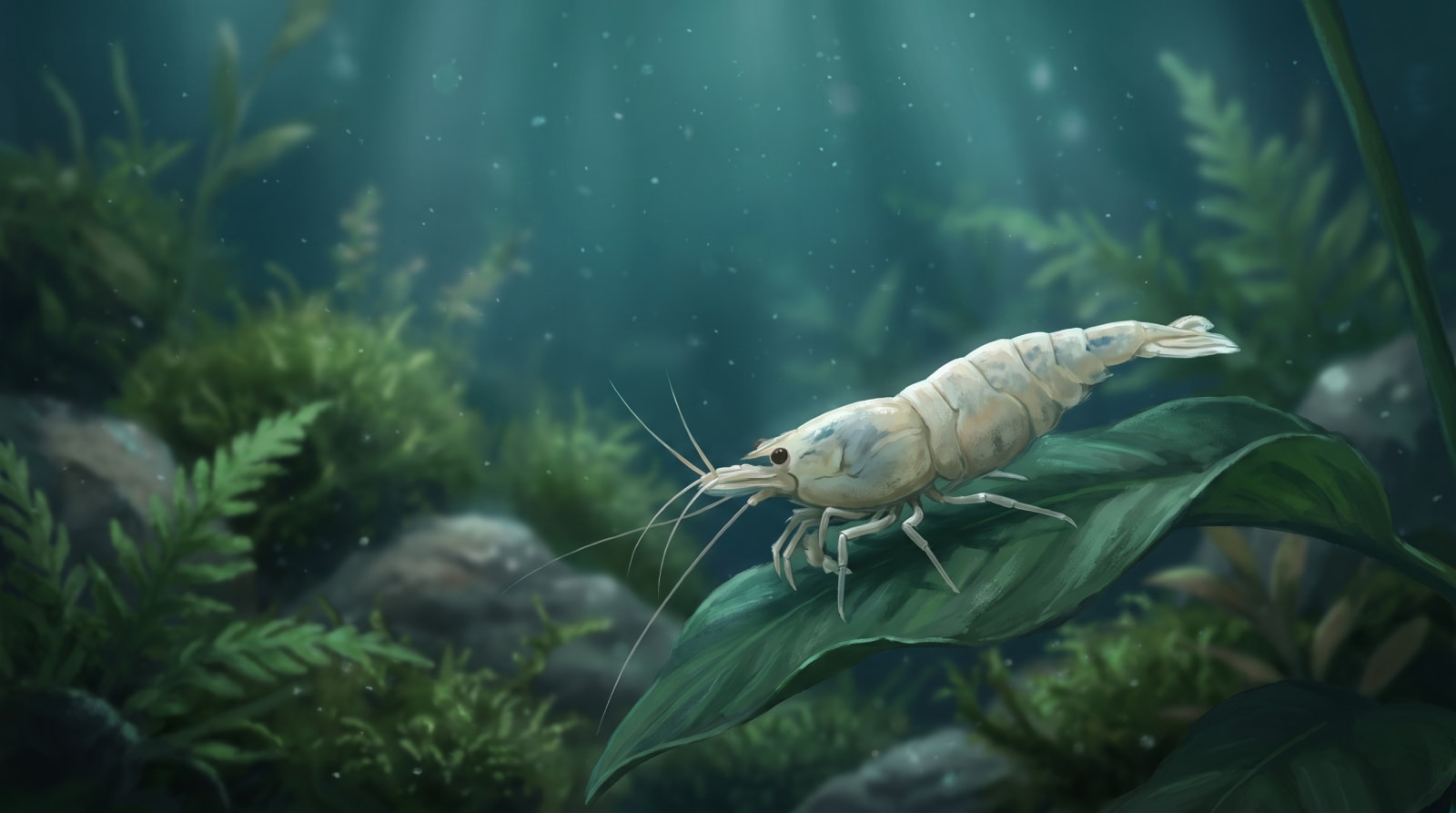
When cherry shrimp start dying, it's water before it's disease almost every time, and the single most useful thing you can do before anything else is test the water. Before you panic, though, know that one dead shrimp in a busy colony is normal: these are animals that live one to two years, so a tank of any size loses the odd one to plain old age. A pattern is different. This is the checklist we run in our own breeding room, in the order we run it, plus one question that tells you which half of it to read first.
One dead shrimp, or a die-off?
Start by deciding whether you actually have a problem. In a healthy colony an occasional death is attrition, not an alarm — with a one-to-two-year lifespan, something is always quietly reaching the end of it. What matters is the rate. One shrimp every few weeks in a busy, grazing tank is normal. Several in a week, or a tank that was fine and suddenly isn't, is a pattern worth working through.
Before you count a death at all, make sure it's a death. A shed exoskeleton fools almost everyone at first, because it's a complete, shrimp-shaped ghost lying in the open. The tell is colour and clarity: a moult is translucent and hollow, often split across the back where the shrimp climbed out, while a dead shrimp is opaque and holds its colour, turning pink or orange as it breaks down. Leave a moult in the tank — the colony eats it back within a day or two and recycles the minerals. If you're fishing out pink bodies, though, read on.
All at once, or one by one?
This is the question that halves the diagnosis, so answer it before you touch anything. Deaths that come all at once and deaths that come one by one point at completely different causes.
All at once — several shrimp in a day or two, or a colony that crashes — nearly always means something acute in the water. Something changed: an ammonia spike, an unconditioned water change, a temperature crash or spike, a slug of copper, a freshly added plant carrying pesticide. Acute deaths are a sudden event, and you're hunting for what happened in the last day or two.
One by one — a shrimp every few days over weeks, while the rest of the colony grazes and breeds normally — points at something chronic and low-level instead. Nothing changed suddenly; something has been quietly wrong. The usual suspects are GH too low for clean moults, nitrate creeping up from overfeeding, an ageing group all reaching the end together, a persistent trace toxin, or a slow disease picking off the weakest. Cherry shrimp dying one by one is a slower, more frustrating puzzle, but it's a more forgiving one, because you have time to test and correct.
Hold that split in mind as you work down the checklist below. We've listed the causes in the order we check them, and flagged for each whether it tends to kill all at once or one by one.
1. Test ammonia and nitrite first
Whatever the pattern, your first move is a liquid test for ammonia and nitrite. Both must read zero. Cherry shrimp are more sensitive to both than most fish, and any measurable level is an emergency rather than a number to improve on later.
The classic cause is a tank that was never fully cycled. A shrimp tank needs an established nitrogen cycle — usually four to six weeks or more — before any shrimp go in, and an uncycled tank sits behind most first-week and first-month die-offs we're asked about. This one usually kills all at once, because an ammonia spike hits the whole colony together. If you get a reading, act now: a large temperature-matched, dechlorinated water change to dilute it, stop feeding, and read our guide to cycling a shrimp tank before you restock. Nothing else on this list matters until these two read zero.
2. Chlorine and chloramine
If the deaths followed tap water going into the tank, suspect the water conditioner next. Chlorine and chloramine are both in UK mains supplies to keep them safe for us, and both are lethal to shrimp. The trap is chloramine: unlike chlorine it doesn't gas off if you leave a bucket standing overnight, so "I let it sit out" is not the same as treating it.
Use a conditioner that explicitly neutralises chloramine as well as chlorine, dosed for the full volume of new water, every single change without exception. This one kills all at once — a whole batch of new water hits every shrimp together — and it's entirely preventable. If you've been standing water rather than dosing it, that alone can be your answer.
3. Copper, the silent killer
Copper is the classic hidden killer of a shrimp tank, because the source is usually something you added on purpose for another reason. Copper-based fish medications are the big one: dose a shrimp tank with a copper treatment "just for the fish" and you can lose the whole colony. Some snail treatments and a few plant products carry it too.
To be clear about what's safe, the trace of chelated copper in a quality shrimp-safe plant fertiliser is fine — it's tiny and bound up. A copper medication is a different thing entirely. If you've medicated the tank recently, copper is your prime suspect, and it typically kills all at once. There's more on sources and testing in our guide to copper and shrimp. The rule is simple: no copper-based medications in a shrimp tank, ever.
4. GH and the failed moult
If shrimp are dying during or just after a moult, look at your GH. General hardness supplies the calcium and magnesium a shrimp builds its new shell from, and too little of it produces soft, incomplete moults the shrimp can't complete — the failure known as the white ring of death, where a pale band appears behind the head and the shrimp can't pull free. Most that reach that stage don't survive it.
This one tends to kill one by one, quietly, because each shrimp only moults every few weeks and only some hit the wall. The target is GH 6–12, and stability matters as much as the number — a big swing does as much damage as an outright shortage. It's the classic hidden cause in Britain's soft-water regions, where tap GH can sit well below 6. We've written the whole failure up in moulting problems and the white ring of death.
5. Temperature and TDS swings — the water-change death
"My shrimp died after a water change" is one of the most common messages we get, and the cause is almost always a swing rather than the fresh water itself. Shrimp tolerate a wide band of conditions but hate sudden movement through it. Change too much water at once, or add new water that's a different temperature or a very different TDS from the tank, and you've handed the whole colony a shock.
The mechanism is often a bad moult: a sudden change in mineral level or temperature can trigger shrimp into moulting before their new shell is ready, which loops straight back to the white ring above. It usually shows as an all-at-once event in the day after a change. The fix is gentle husbandry — small weekly changes of 10–20%, temperature-matched and dechlorinated, added slowly rather than tipped in. Our guide to safe shrimp water changes covers the method that keeps a colony steady.
6. Pesticides on new plants
If the deaths started within a week or two of adding plants, suspect pesticide residue. Aquarium plants are often farmed with insecticides to keep them pest-free, and shrimp are insects' aquatic cousins as far as those chemicals are concerned — a residue harmless to fish can wipe a shrimp colony. This one usually kills all at once, and shortly after the plant went in.
Tissue-culture and in-vitro plants are the safest bet because they're grown sterile. Anything else should be rinsed hard and, ideally, quarantined in a plant-only bucket for a week or two with water changes before it goes near shrimp. The full routine, including which dips are worth the risk, is in preparing new plants and the pesticide dip.
7. Overfeeding and creeping nitrate
Overfeeding is the single most common way keepers quietly kill a shrimp tank, and it works slowly enough that most don't connect cause to effect. Uneaten food rots, feeding ammonia and nitrate; it fuels planaria, hydra and snail blooms; and it pushes TDS upward over weeks. The result is a tank that tests a bit worse every week and loses a shrimp here and there — a textbook one-by-one decline.
A mature tank feeds cherry shrimp most of the time on its own biofilm, so supplements are exactly that. We feed two to three times a week and remove any fresh food that's still sitting there after a few hours. If your checklist has ruled out the acute causes and shrimp are still going one at a time, cut the feeding right back, do small water changes, and watch the nitrate come down. The full argument, signs and recovery week are in our guide to overfeeding shrimp.
8. Disease, last on the list
Only once water is ruled out is it worth reaching for disease, because in our experience it's a distant cause compared with everything above. When it is disease, it usually shows on the body: vorticella as white fuzzy patches, often at moult sites; scutariella as tiny white worms on the rostrum; and bacterial or muscular necrosis as opaque, milky or pinkish tissue inside an otherwise clear body.
That last one matters for this checklist, because milky white muscle is sometimes mistaken for the white ring of death — but it's internal tissue turning opaque, not a shell separation, and it's usually fatal for the individual. Disease tends to pick off shrimp one by one rather than crash a colony, and none of it is treated with copper. Our cherry shrimp disease photo guide helps you tell them apart before you treat anything.
New shrimp dying in the first week
New shrimp dying within days of arriving is a case of its own, and it's usually not disease either. Two things account for most of it: an uncycled tank, which sends you back to step one, and acclimation shock. Shrimp are acutely sensitive to a sudden jump in TDS or parameters, and the gap between a seller's water and yours can be wide enough to kill on its own if you rush the introduction.
Drip acclimatise every new group slowly — an airline siphon knotted to a drip or two per second, over one to two hours, so the new water eases in rather than arriving all at once — and never tip the shipping water into your tank. It also pays to buy from a seller who can tell you their water parameters, so you know how far your acclimation has to travel. The whole method is in our guide to acclimating new shrimp by the drip method.
FAQ
Why are my cherry shrimp dying one by one?
One-by-one deaths over weeks, with the rest of the colony grazing normally, point to a chronic low-level problem rather than a sudden event. The usual causes are GH too low for clean moults, nitrate creeping up from overfeeding, a persistent trace toxin, or an ageing group reaching the end together. Test GH and nitrate first, cut feeding back, and you'll usually find it.
Why did my shrimp die after a water change?
Almost always a swing rather than the fresh water itself. Changing too much at once, or adding water that's a different temperature or TDS from the tank, shocks the whole colony and can trigger fatal moults. Switch to small weekly changes of 10–20%, temperature-matched and dechlorinated, added slowly. And check your conditioner treats chloramine, which doesn't gas off if water is simply left to stand.
Why do my new cherry shrimp keep dying?
New shrimp dying in the first week usually means the tank wasn't fully cycled, or the shrimp were acclimatised too fast. Test ammonia and nitrite — both must be zero — and next time drip acclimatise over one to two hours so the change in water is gradual. Buying from a seller who shares their water parameters makes that acclimation far more predictable.
How do I know if my shrimp is dead or just moulting?
Look at colour and clarity. A moult is a translucent, hollow, shrimp-shaped shell, usually split across the back where the shrimp climbed out; leave it in for the colony to eat. A dead shrimp is opaque, holds its body colour, and turns pink or orange as it breaks down. If you're pulling out pink bodies rather than clear shells, work through the checklist above.
Can one dead shrimp kill the rest of my colony?
Not in a healthy, stable tank. A single body is broken down quickly by the colony and snails, recycling harmlessly. The only time it matters is in a tank that's already struggling — an uncycled or overstocked one — where the extra decay can nudge ammonia up. In a cycled, sensibly stocked tank, one death is attrition, not a threat.