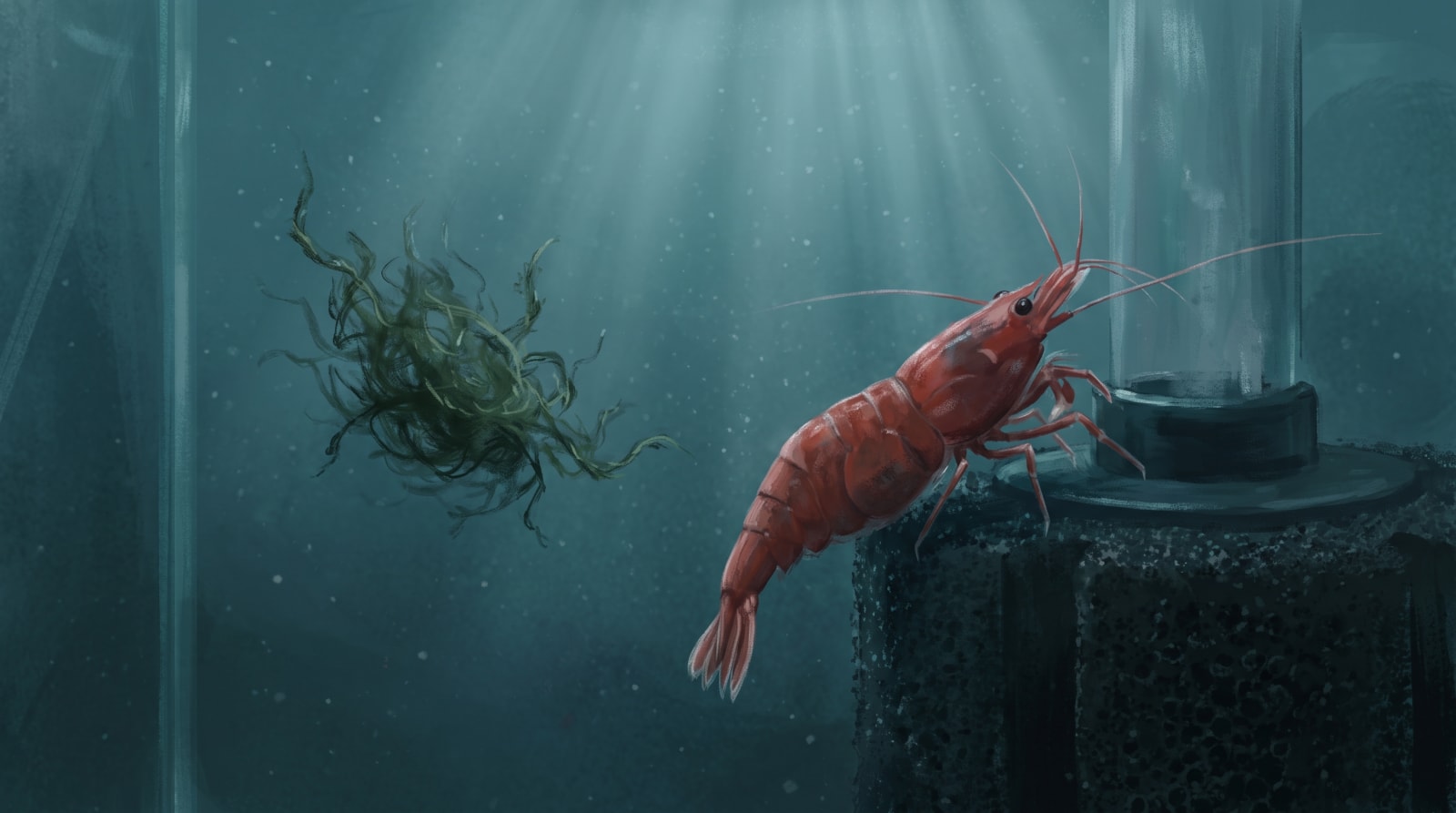
Quarantine is the step almost everyone skips, and the one that saves the colonies worth saving. A couple of weeks in a separate tank lets a new group show you what it arrived carrying — rostrum worms, hitchhiking pests, the odd hidden disease — before any of it reaches shrimp you've spent months building up. Whether that's worth the bother depends entirely on what the newcomers are joining, so the honest answer to "should I quarantine?" is another question: what are you protecting?
The honest verdict: it depends what you're protecting
Quarantine protects the tank the new shrimp are going into, not the shrimp themselves. That one sentence settles most of the argument.
If you're stocking a brand-new tank, there's nothing in it yet to protect, and plenty of keepers — us included, more than once — drip the first group straight in. The tank itself is the quarantine, because it holds no other shrimp to infect. Watch that first group closely, but a separate setup earns you little.
The calculation flips the moment you have an established colony you'd hate to lose. Drop an unscreened newcomer into a settled tank of blue dreams, or a hard-won high-grade red line, and a single shrimp carrying scutariella or a clump of moss hiding planaria can undo a year of work. For a colony that's breeding well and holding its colour, a two-to-four-week quarantine is cheap insurance against an expensive mistake.
What quarantine actually screens for
You're not watching for one thing; you're giving several slow problems the time they need to reveal themselves.
Rostrum worms (scutariella). Tiny white stalks on the head or nose, easy to miss on a shrimp or two in a busy shop tank and easy to spot over a fortnight of close watching. They spread through a colony and their eggs sit in shed shells, so catching them in a bare quarantine tank — where you can see and remove every moult — is far simpler than chasing them through a planted display. The treatment and the reason you repeat it are in our scutariella guide.
Hitchhiking pests. New shrimp rarely travel alone. A bag often includes a sprig of moss or a little plant matter, and that's how planaria, hydra and pest snails and their eggs get into a tank in the first place. A quarantine tank keeps all of that away from the display until you've had a proper look at what came along for the ride.
Pesticide residue on plants. If a new shrimp arrives wrapped in a plant, or you're adding new plants at the same time, quarantine is where they go. Shop and farm plants are often grown with insecticides that stay lethal to shrimp long after the leaves look clean, and this is one of the most common ways a keeper wipes out a tank without ever suspecting the plant. The full routine for preparing new plants is worth reading before anything green goes near your colony.
General health. A fortnight simply lets weak or sick stock declare itself — white fuzz, milky tissue, a shrimp that never grazes — before it's mixed in with the rest. Knowing what healthy shrimp look like turns that waiting time into a proper inspection rather than a guess.
A quarantine tank is simpler than you think
People picture a second full aquascape. It isn't. A quarantine tank is the most stripped-back setup in the house: a bare 10L, a sponge filter and a clump of moss. That's the whole shopping list.
The bare bottom is a feature, not a compromise. With no substrate, every dropped moult, every planarian gliding across the glass and every snail you didn't order is obvious, and clearing up after a treatment takes a jug and two minutes. The moss earns its place by giving the shrimp cover and a surface of biofilm to graze, so they settle and eat instead of sitting stressed in an empty box.
The one thing that isn't optional is a cycled filter. A quarantine tank still needs an established nitrogen cycle, or you've swapped the risk of disease for the certainty of ammonia. The easy route is to keep a spare sponge filter running permanently in your main tank, so it's colonised and ready to move across the day you need it; failing that, seed a fresh sponge from a mature one and let the tank cycle properly before the shrimp arrive. A small preset heater is a sensible extra if the room runs cold, but nothing here is exotic or expensive.
How long, and what you're watching for
Two to four weeks is the useful window, and the reason is the moult. Adults moult every three to six weeks, and several problems — scutariella especially — hide their eggs in the old shell, so seeing a new group through at least one moult tells you far more than a few days ever could. Give it a fortnight at minimum; a month is better if you can hold your nerve.
Feed lightly and watch how they graze. Active, constant grazing is the single best sign a shrimp is healthy, and a newcomer that picks at surfaces all day is telling you it's fine. What you're scanning for each day is a short list: white stalks on the rostrum, white fuzzy patches at moult sites, any milky or opaque tissue inside the body, flatworms on the glass, and snails multiplying in the corner.
There's a quieter benefit to the wait, too. New shrimp almost always arrive pale and skittish from the journey, and a fortnight in a calm, low-traffic tank lets them find their colour and their confidence before they meet an established colony — so a quarantine tank doubles as a gentle settling-in room, not just a sickbay.
If the group comes through clean — grazing hard, colouring up, no passengers — they've earned their place. Drip acclimatise them into the main tank exactly as you would any new arrival, because moving between two tanks is still a change in water they need easing into. Our drip method guide covers doing it slowly enough that the move itself doesn't undo the quarantine.
If quarantine finds something, you've already won
The whole point of the exercise is that a problem shows up in a bare 10L instead of your main aquascape, where it's a hundred times easier to deal with.
For rostrum worms or a case of white fuzz, the consensus fix is a short salt dip: one level tablespoon of aquarium or rock salt dissolved in 250ml of tank water, the shrimp held in it for 30 to 60 seconds while you watch it, then straight back into clean water. Repeat after the next moult, because that's when a fresh batch of eggs hatches out. Never add salt at that strength to the tank itself — it's a dip, not a dose.
Hitchhiking planaria or pest snails are far simpler to clear from a bare tank than a planted one, and if you reach for a wormer to do it, treat in the quarantine tank and never near shrimp you can't afford to lose. Whatever the problem, the rule that governs every shrimp treatment still holds: no copper, ever. If you're unsure what's safe to use around invertebrates, we keep a running list in our guide to shrimp-safe medications.
FAQ
Do you need to quarantine new shrimp?
Not always. If you're stocking a brand-new tank there's nothing to protect, so many keepers add the first group straight in and simply watch them closely. The case for quarantine gets strong once you have an established colony worth keeping safe, because one unscreened newcomer can bring in scutariella, pest snails or planaria. The rule of thumb: quarantine protects the tank you're adding to, not the shrimp you're adding.
How long should you quarantine shrimp?
Two to four weeks. The key is to see the new group through at least one moult, because adults moult every three to six weeks and several problems — scutariella in particular — carry their eggs in the shed shell. A fortnight is the sensible minimum and a month is better. Feed lightly, watch them graze, and only move them on once they're grazing hard and carrying no passengers.
What does a quarantine tank need?
Very little: a bare 10L, a sponge filter and a clump of moss. The bare bottom makes moults, worms and stray snails easy to spot, and the moss gives the shrimp cover and biofilm to graze. The one non-negotiable is that the filter is already cycled — keep a spare sponge running in your main tank so it's ready to move across when you need it, rather than starting a cycle from scratch with shrimp inside.
Can you add new shrimp straight to the tank?
You can, and on a first tank it's often what we'd do, but it's a gamble you only lose occasionally — and when you lose it, you can lose the whole colony to a pest or disease that hitched in. If the tank already holds shrimp you'd hate to lose, the odds swing firmly towards a couple of weeks in quarantine first. Either way, inspect hard before you buy and drip acclimatise slowly.