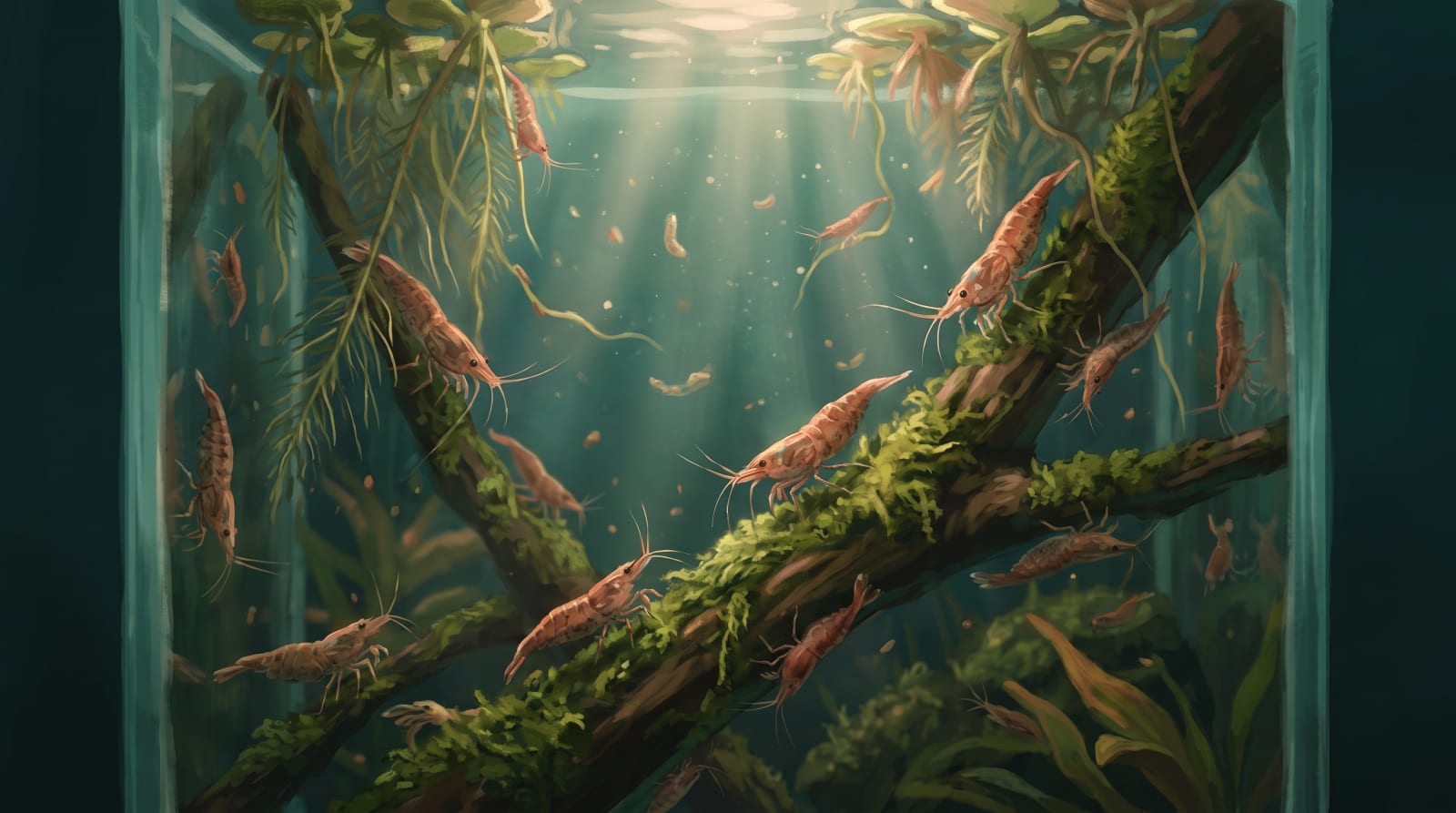
Every aquascape you'll see praised online was composed for a camera and a fish, not for a shrimp. The named styles the hobby loves — iwagumi, nature, jungle and the rest — each treat a shrimp colony very differently, and a couple of them are actively bad for one. This is a tour of those styles from the other side of the glass: not which looks best in a competition photo, but which lets shrimp graze, hide and breed. If you want the buildable layouts we actually run, they're in our aquascaping ideas for shrimp tanks; this piece decodes the style names first.
How to judge any style for shrimp
A shrimp reads a tank as three things at once, and every style scores differently on each. Hold this test in your head and you can rate any scape you see.
- Cover. Dense, shaded hiding places, moss above all. Shrimplets graze from the day they hatch but do it hidden, so cover is the single biggest lever on how many reach adulthood. A style with no cover is a display, not a nursery.
- Grazing surface. Biofilm and soft algae growing on wood, leaves, moss and stone are the primary food. Texture is calories. Smooth, minimal scapes grow less of it.
- Line-of-sight breaks and an open floor. Structure that interrupts sightlines makes a colony bolder, so it grazes in the open where you can watch it. One clear patch of substrate at the front gives you somewhere to feed and view.
There's a fourth factor the photos never mention: a nano tank is a small body of water, and small water swings fast. Whatever the style, 19 litres holds temperature and chemistry far steadier than 10, and stability beats a perfect layout every time. With that test set, here are the five styles you'll actually be choosing between.
Iwagumi: gorgeous, and the worst of the lot for shrimp
Iwagumi is the minimalist Japanese stone style — an odd number of carefully placed rocks over a low carpet, and almost nothing else. It is the most photographed nano style there is, and we'll be blunt: judged as a home for shrimp, it comes last.
The problem is the whole point of the style. Iwagumi is defined by open space and restraint, which means no thickets, no leaf litter, nowhere for a shrimplet to vanish. A true iwagumi offers a berried female and her brood nowhere to hide, and shrimplet survival in one is poor unless you break the rules. It also asks the most of you: a carpet wants stronger light, a proper fertiliser routine and often CO2, none of which shrimp need and all of which add ways to go wrong. If you want to attempt a carpet anyway, our carpet plants in shrimp tanks guide is honest about which will actually knit without gas, and any fertiliser or CO2 you add around invertebrates wants a careful, conservative hand.
There's a water catch too. Classic iwagumi stone is seiryu, a limestone that slowly lifts GH, KH and pH as it dissolves. Neocaridina usually tolerate the drift — keep GH inside 6–12 and watch your real numbers against our Neocaridina water parameters — but you're managing a moving target you didn't have to create. Pick an inert stone — slate, dragon stone or lava rock — and the problem disappears entirely.
Can it be done? Yes, with both eyes open, and the cheat is simple: tuck a seam of moss into the stone crevices. The judges aren't coming, and that hidden moss is the difference between a colony and a slow fade.
Nature style: the workable middle ground
Nature style — the Amano-derived "nature aquarium" look — is what most people mean by a planted tank. Wood and stone arranged to suggest a landscape, planted in drifts with depth and a focal point, but without iwagumi's vow of emptiness. As a shrimp home it sits comfortably in the middle, and it's the style we'd point a first-timer towards if they want something that photographs well and still keeps shrimp happy.
It works because it lets you build in cover without breaking the aesthetic. A branch draped in moss, a shaded pocket behind the main wood, epiphytes like anubias and java fern layered up the hardscape — all of it reads as "nature style" and all of it feeds and shelters shrimp. The best plants for shrimp tanks are, conveniently, the same tough low-tech species this style leans on.
The only discipline it asks is that you resist the urge to keep everything tidy and open for the photo. Leave one dense, slightly messy corner. That corner is where the next generation comes from, and a nature-style tank with a proper cover zone is a genuinely good shrimp tank.
Jungle: the colony grower's style
If the goal is shrimp rather than a magazine cover, jungle wins. The jungle style is deliberate controlled chaos — heavy planting, plants left to grow into each other, floating cover on top and only a small clearing kept open. It looks the least "designed" of the five and it is comfortably the best for a breeding colony.
Everything a shrimp wants, this style has by default. Grazing surfaces at every height, shade and sightline breaks everywhere, and a floor packed with cover so berried females simply disappear and reappear trailing shrimplets. Cap it with floating plants — frogbit, salvinia and the like — and you add overhead shade plus a curtain of biofilm-rich roots exactly where young shrimp cruise. This density is also the biggest single factor in how many young survive, which is the whole subject of raising shrimplets.
The trade-off is upkeep and sightlines: a jungle needs trimming before it swallows the open patch, and a heavily grown tank hides your shrimp as readily as it hides your view of them. For a colony we take that deal every time.
Moss-focused and the cascading moss waterfall
Strip a scape back to mostly moss and you've arguably built the ideal shrimp tank by accident. Moss is the single best shrimplet cover available and every strand doubles as grazing surface, so a moss wall, a moss-covered stone or a full moss carpet is about as shrimp-friendly as aquascaping gets. Most tanks in our breeding room are some version of this. Which moss you use barely matters for the shrimp — java, christmas, flame and the rest all do the same job, and our moss guide for shrimp tanks sorts them on looks and habit.
The eye-catching version is the cascading moss waterfall: a hardscape hill with a "stream" of pale sand running down it, moss trained along the banks so it reads as water tumbling over rock. The showiest builds hide an air line under the sand that lifts fine grains so they spill down the slope like a real waterfall. Judged for shrimp, the verdict splits cleanly. The moss is superb — nursery and buffet in one. The sand-fall itself is pure theatre: fiddly to balance, easy to clog, and it does nothing for the colony. Build the waterfall if the look delights you, but know the shrimp are there for the moss and wouldn't miss the sand.
Botanical and blackwater-lite: the biofilm engine
The botanical style is less an aquascape than a feeding system with a nice mood. Dark substrate, a piece or two of driftwood, then leaf litter and botanicals — catappa (Indian almond) leaves, alder cones, cholla wood — with a little moss or an anubias so it reads as a scape rather than a pile of leaves. "Blackwater-lite" is the tamed version: enough botanicals for the tannins to tint the water a gentle amber, not the near-black of a true blackwater biotope.
For shrimp this is one of the best styles going, and the least work. As the leaves and wood soften they grow biofilm around the clock, feeding adults and shrimplets alike, and the litter doubles as shelter and moulting cover. It's the nearest thing in the hobby to the leaf-strewn streams this species actually evolved to graze. You top it up rather than maintain it — drop in fresh leaves as the shrimp skeletonise the old ones — and the amber water happens to make red cherry colour glow. The tea-stained look divides opinion; we love it, and so, visibly, do the shrimp.
So which style should you choose?
Rank the five purely on shrimp welfare and the order is clear: jungle and moss-focused at the top, botanical close behind, nature style a solid all-rounder, iwagumi last. If you want a growing colony and don't much care what the competition circuit thinks, build a jungle or a moss tank and be done. If you want a scape that looks composed and still keeps shrimp well, nature style is your best balance of beauty and biology.
Only reach for iwagumi if the minimalist look is worth the extra effort and the cheat-seam of moss to you — and if it is, go in knowing you're keeping shrimp in spite of the style, not because of it. Whichever you pick, the same unglamorous habits carry it: a sponge filter, modest light, one open patch of floor, and small steady water changes. The style is staging. The shrimp are the show.
FAQ
Is iwagumi good for shrimp?
It's the weakest of the popular styles for shrimp. Iwagumi's open, minimal look leaves shrimplets nowhere to hide, so survival is poor unless you break the style by tucking moss into the stonework. It also usually means a carpet, which wants more light, fertiliser and often CO2 than shrimp need. Beautiful to look at, but you're keeping shrimp in spite of it.
What is the best aquascape style for shrimp?
The jungle style, or a moss-focused tank. Both give dense cover, huge grazing surface and the shaded hiding places that let shrimplets survive, which is what grows a colony. The botanical blackwater-lite style is a close third for the constant biofilm it produces. All three suit the low light and sponge filter a shrimp tank runs on, with no CO2 required.
How do you make a cascading moss waterfall in a shrimp tank?
Build a hardscape hill, run a "stream" of pale sand down it, and train moss along the banks so it looks like water over rock; the fancy versions hide an air line under the sand to make grains spill down. For shrimp, the moss is the valuable part — nursery and food in one — while the sand-fall is cosmetic and fiddly. Add it for the look, not for the colony.
Can you keep shrimp in a nano aquascape?
Yes — a shrimp tank is a nano aquascape almost by definition, at 10 litres minimum and 19 or more if you can. The only rules that matter are cover for the shrimplets, an inert or shrimp-safe hardscape, and small steady water changes so the small water volume doesn't swing. Style is a free choice on top of those basics.
Do aquascaped shrimp tanks need CO2?
No. Every style here except a true iwagumi carpet runs happily on modest light and no added CO2, because the tough plants shrimp tanks lean on — mosses, anubias, java fern, floaters — are all low-tech. CO2 is fine for shrimp when it's stable and gentle, but it's an aesthetic upgrade for demanding carpets, never a requirement for the shrimp themselves.