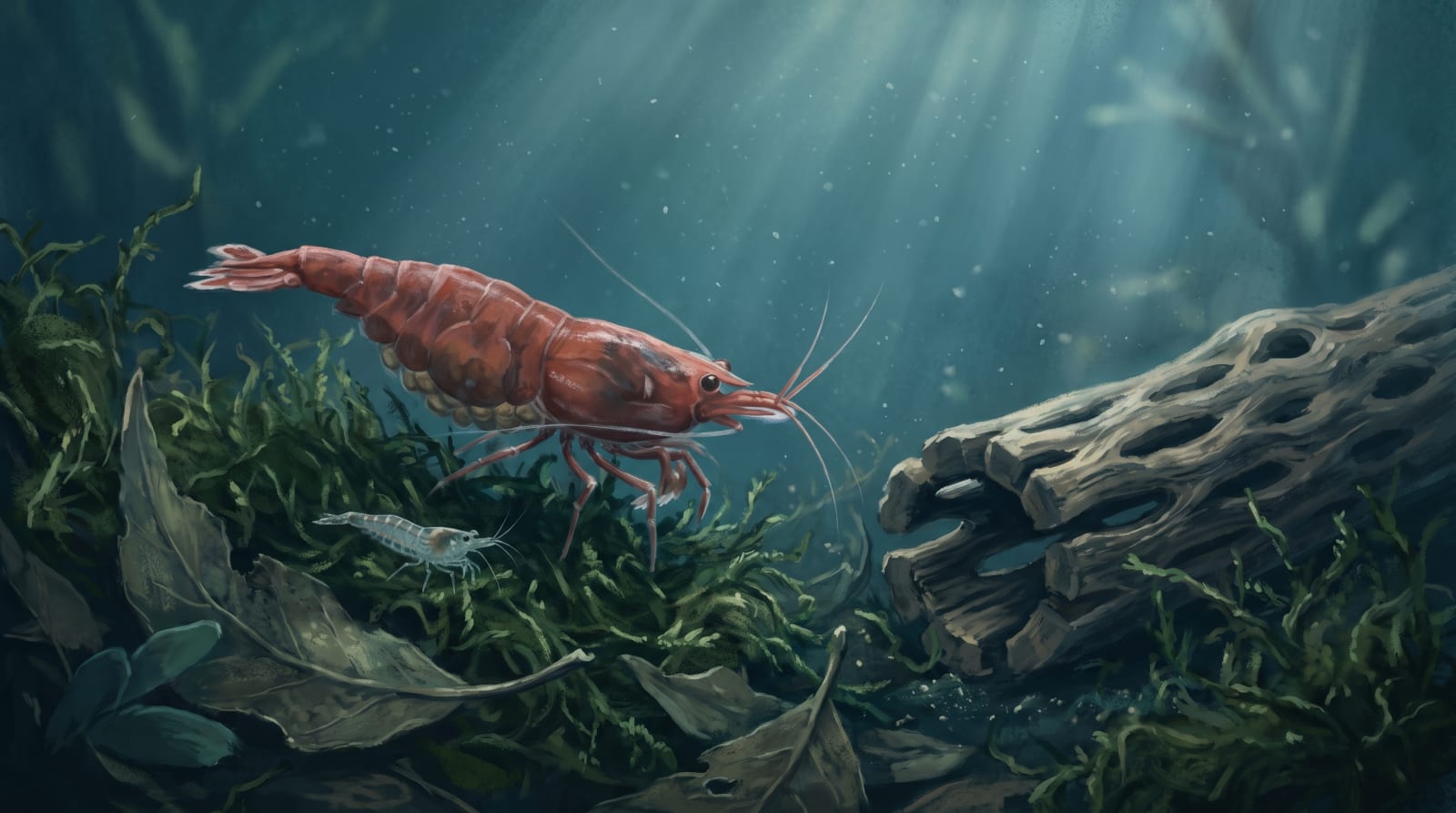
In a breeding tank, décor isn't decoration — it's survival kit. Newborn shrimp are 1–2mm and defenceless, freshly moulted adults spend a day or two soft and hiding, and both need somewhere to graze, shelter and disappear the moment they're exposed. Cover is what turns a handful of shrimp into a colony, and the good part is that the kit which works best is almost all cheap. Fancy "shrimp furniture" rarely beats a mat of moss and a handful of leaves.
Cover is survival
Every serious shrimp keeper ends up repeating the same line, because it's the truest thing in the hobby: cover equals survival. A bare, open tank grows very few shrimp no matter how good the water is, and a cluttered, planted one grows plenty.
There are three separate jobs décor does, and the best pieces do more than one:
- Grazing surface. Every branch, leaf and strand of moss films over with biofilm — the primary food shrimplets eat from the day they hatch. More textured surface means more food, spread everywhere the babies already are.
- A hide. Shrimp are prey animals and settle when they can duck out of sight. A tank full of shadows and tangles is a tank of confident, out-in-the-open shrimp; a bare one keeps them nervy.
- Moult shelter. For 24–48 hours after each moult — every 3–6 weeks for an adult — the new shell is soft and the shrimp is helpless. It spends that window tucked deep in cover, and whether that cover exists decides whether it comes back out.
Cover matters even in a species-only tank, where boldness and colour improve with it, but it's non-negotiable if there are fish, where it's the only thing standing between your shrimplets and the shoal. The wider survival picture is in raising shrimplets; this guide is the kit that builds the cover.
Moss: the one thing to get right
If you add nothing else on this page, add moss. It's the single best piece of breeding décor there is, because it does all three jobs at once and does them better than anything you can buy.
A moss thicket is a three-dimensional maze a shrimplet never has to leave. It grazes biofilm off the strands, hides between them, and rides out its moults deep inside, all without crossing open ground. Java moss is the classic — undemanding, cheap, and it grows into exactly the dense tangle babies need — but christmas, flame and weeping moss all do the same job with different textures. We rate them species by species in the moss guide.
The beauty of moss is that it's nearly free and only multiplies. A small portion tied to a stone or a piece of wood spreads into a thicket over a couple of months, and every trim you take can start another tank. Tuck a mossy stone in front of the glass and you'll spend evenings watching a berried red cherry female fan her eggs from inside it.
Cholla and botanical wood
Cholla is the shrimp keeper's classic wood, and it's breeding décor as much as hardscape. It's the hollow, hole-riddled skeleton of a cholla cactus, and as it softens underwater it turns into a honeycomb the colony grazes down to a shell — shrimplets living inside the tubes the whole time. It's inert, it's cheap, and if you buy one piece of wood for a breeding tank, this is the one.
Other aquascaping woods pull their weight too: spider wood throws a tangle of fine, shaded branches, and gathered oak or beech does the same job for free if you know the source hasn't been sprayed. All of them grow biofilm and cast the shade shrimp love. Wood does need a soak or a boil to sink it and settle it in, and the safety and prep side — which woods, which rocks, the vinegar test — is covered properly in our shrimp-safe wood and rock guide.
Botanicals: leaves, pods and cones
Botanicals are the cheapest grazing stations in the hobby, and a breeding tank loves them. A catappa (Indian almond) leaf, a few alder cones, a scatter of dried oak or beech leaves — as they soften and break down they become biofilm factories the whole colony picks over, and the leaf litter itself is cover shrimplets disappear into.
They do a little chemistry too, releasing gentle tannins that tint the water and mildly favour biofilm, but the point in a breeding tank is the food and the cover, not the tea-coloured water. Leaves are the closest thing to a free shrimplet nursery you can add: gather them unsprayed and dry, or buy a bag of aquarium-grade ones for pennies, and top them up as the colony grazes them down to skeletons. A tank with leaf litter on the bottom raises more babies than a spotless one, every time.
Tubes and ceramic hides
"Shrimp tubes" are the one piece of dedicated kit worth a mention: short lengths of ceramic, clay or cholla that give shrimp a defined hide and give you somewhere to look. Shrimp gather in them, moult in them, and a berried female will often sit out her days tucked inside one where you can keep an eye on her.
Here honesty matters, because this is where money gets wasted. A plain terracotta tube, a length of cholla, or a couple of bits of slate leaned into a cave do exactly the same job as a moulded "shrimp condo" at a fraction of the price — the shrimp cannot tell the difference and, once it's filmed over with algae, neither can you. Tubes are genuinely more for your convenience than the colony's survival: if the tank is well planted and mossed, the shrimp already have all the shelter they need. Add a tube or two because you like watching shrimp cluster in them, not because a colony fails without them.
Cover from above: floating plants
The one kind of cover that's easy to forget is the kind at the surface. Floating plants trail long roots down into the water, and those root curtains are prime shrimplet habitat — biofilm-rich, dense enough to hide in, and dangling right where baby shrimp are already grazing.
Frogbit, salvinia and their relatives also shade the tank, break up the sightlines a hunting fish relies on, and mop up nitrate as they grow. In a community breeding tank a thick raft of floating roots is one of the best odds-improvers you can add above the shrimp; in a species-only tank it's a free biofilm garden. Duckweed does the same job but comes with a warning — you never fully get it out again — and the whole roster is in our floating plants guide.
Building cover on a budget
Put it together and a proper breeding setup costs next to nothing. A mat of moss tied to a stone, one or two pieces of cholla, a handful of dried leaves topped up as they break down, a floating plant multiplying at the surface, and — if you fancy it — a plain clay tube to watch them gather in. That's a colony's whole world, and it comes to less than a single high-grade shrimp.
Spend on the shrimp and the water; save on the décor. The colony doesn't grade its furniture by price — it grades it by surface area, shade and tangle, and moss and leaves win that contest against anything moulded and marketed. If you're setting the tank up as a dedicated colony rather than a mixed display, our species-only vs community guide covers that decision, and everything here slots straight into it.
FAQ
What is the best décor for a shrimp breeding tank?
Moss, first and above everything — a dense thicket does all three jobs a breeding tank needs (grazing surface, hide and moult shelter) at once, and it's nearly free. After that, cholla wood and a scatter of botanical leaves for biofilm and cover, plus floating plants for their root curtains. Skip the expensive moulded ornaments; the colony judges cover by surface and shade, not by price.
Is cholla wood good for a shrimp tank?
It's one of the best things you can add. Cholla is the hollow skeleton of a cholla cactus, and as it softens it becomes a honeycomb of grazing surface with tubes shrimplets shelter inside. It's inert, so it won't shift your water chemistry, and it's cheap. Give it a soak or a boil to sink it first — the prep is covered in our shrimp-safe wood and rock guide.
Do cherry shrimp need hides?
They don't need dedicated ornaments, but they absolutely need cover — somewhere to shelter after a moult and out of sight the rest of the time. Dense moss, tangled wood and leaf litter provide all the hiding a colony wants; a plain clay tube is a nice extra for your viewing, not a requirement. A tank with good cover has calmer, bolder, better-coloured shrimp and raises far more young.
How do I get more baby shrimp to survive?
Cover is the biggest lever after keeping the water stable. Moss thickets, leaf litter and cholla give shrimplets biofilm to graze and somewhere to hide from the moment they hatch, which is why a cluttered tank out-breeds a bare one every time. Remove predators entirely if you can — a species-only tank is the strongest move — and feed the tank rather than the shrimp, so biofilm builds everywhere.
Are expensive shrimp tubes and ornaments worth it?
Rarely. A plain terracotta tube, a length of cholla or a few leaned pieces of slate give shrimp exactly the same hide as a branded "shrimp condo" for a fraction of the cost — once it's filmed with algae, the shrimp can't tell the difference. Spend your money on the shrimp and the plants instead; cheap, tangled, biofilm-covered cover is what a colony actually rewards.